
A Naturalist Journey Across the Cauca Valley, Chocó Rainforest and Coffee Region
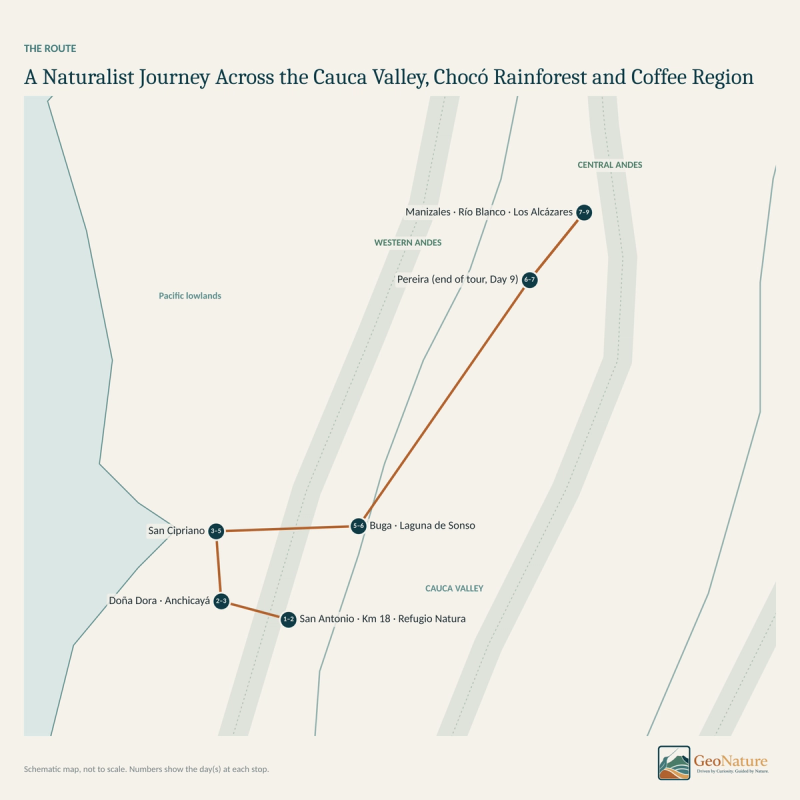
What happens when warm, wet air from the Pacific runs into a mountain range? For 10 days, from Cali to Manizales and back to Pereira, we follow that question: over the Western Andes, down into the Chocó rainforest at San Cipriano, across the Cauca Valley and up through the coffee region into the Andean forests and volcanic highlands of the Central Andes. As we go, we read the ridges, valleys and rocks around us and see how each one shapes what grows there: cloud forest on the crest, rainforest on the Pacific slope, wetlands on the valley floor, coffee on volcanic soil, and above it all the volcanoes that made that soil. Every stop is a chance to explore the plants, the birds and the forces that shaped what we're seeing. It's a private journey, so the pace follows your interests: longer stops where the birding is good, time to kneel beside an orchid, a pause at a roadcut to read the landforms.
Expedition Highlights
- Cloud forest birding at Km 18 and San Antonio, above Cali
- Orchids, bromeliads and other epiphytes
- Hummingbirds, tanagers and Toucan Barbets at the feeders of Doña Dora, on the Pacific slope
- A rail-cart (brujitas) ride into the Chocó rainforest at San Cipriano
- Marsh birds at Laguna de Sonso, one of the last big wetlands of the Cauca Valley
- A morning on a working coffee farm, following the bean from plant to cup
- The Coffee Cultural Landscape of Colombia, a UNESCO World Heritage site
- Antpittas and high-Andean forest at Río Blanco, Manizales
- Lava flows, ash layers and the Andean Condor on the Condor Route above Manizales
- Reading the geology of two Andean ranges and the valley between them
- A private journey at an unhurried pace, guided by people who know the territory
Itinerary
Day 1 · Exploring the Cloud Forest of Cali
We go straight into the cloud forest. San Antonio, on the ridge above Cali, gives us our first birds and a feel for the forest. In the afternoon Refugio Natura, a place built around plants, slows us down for orchids, bromeliads and other epiphytes. The Western Andes rise straight up from the Cauca Valley floor, and part of their crest is rock that formed on the ocean floor and was later pushed onto the continent. Pacific moisture condenses against it, and that is what keeps this forest wet.
Overnight: Km 18
Day 2. Km 18 Trails and Down to Doña Dora
An early walk on the Km 18 trails, when the mixed flocks are most active, then down the Pacific slope to Doña Dora's for the late afternoon. On the way down the western flank you can feel the change: cloud forest gives way to warmer, wetter foothill forest, and the birds change with it.
Overnight: Doña Dora, Anchicayá
Day 3. Doña Dora in the Morning, San Cipriano by Evening
A morning at the feeders and on the trails around Doña Dora's. After lunch we continue down to San Cipriano, riding the last stretch in a rail cart, and settle in for a first evening in the rainforest. Rivers have cut deep valleys into this side of the range, and by evening we're at its foot, where the Pacific air finally lets go of its rain.
Overnight: San Cipriano
Day 4. San Cipriano: A Full Day in the Rainforest
A full day on foot along clear rivers and forest trails, looking for Chocó birds among the palms, epiphytes and understory plants. The Chocó gets some of the highest rainfall on Earth, and its clear rivers run over the rocks of the Western Andes foothills. For many birders, this is the day they remember most.
Overnight: San Cipriano
Day 5. San Cipriano to Buga
One more morning in San Cipriano before we head back over the mountains to the Cauca Valley. Crossing the Western Andes a second time, we trade the soaked Pacific slope for the drier valley floor. Keep an eye on the roadcuts: this drive reads like a cross-section of the range.
Overnight: Buga
Day 6. Laguna de Sonso, then North to Pereira
A morning with the herons, ducks, screamers, rails and other marsh birds of Laguna de Sonso, along with the water plants that keep it alive. The Cauca Valley is a long trough between the Western and Central Andes, filled with river sediments, and Sonso is what's left of the wetlands that once covered much of it. In the afternoon we drive north to Pereira, climbing onto the Central Andes.
Overnight: Pereira
Day 7. Coffee and Coffee-Country Birds, Then Manizales
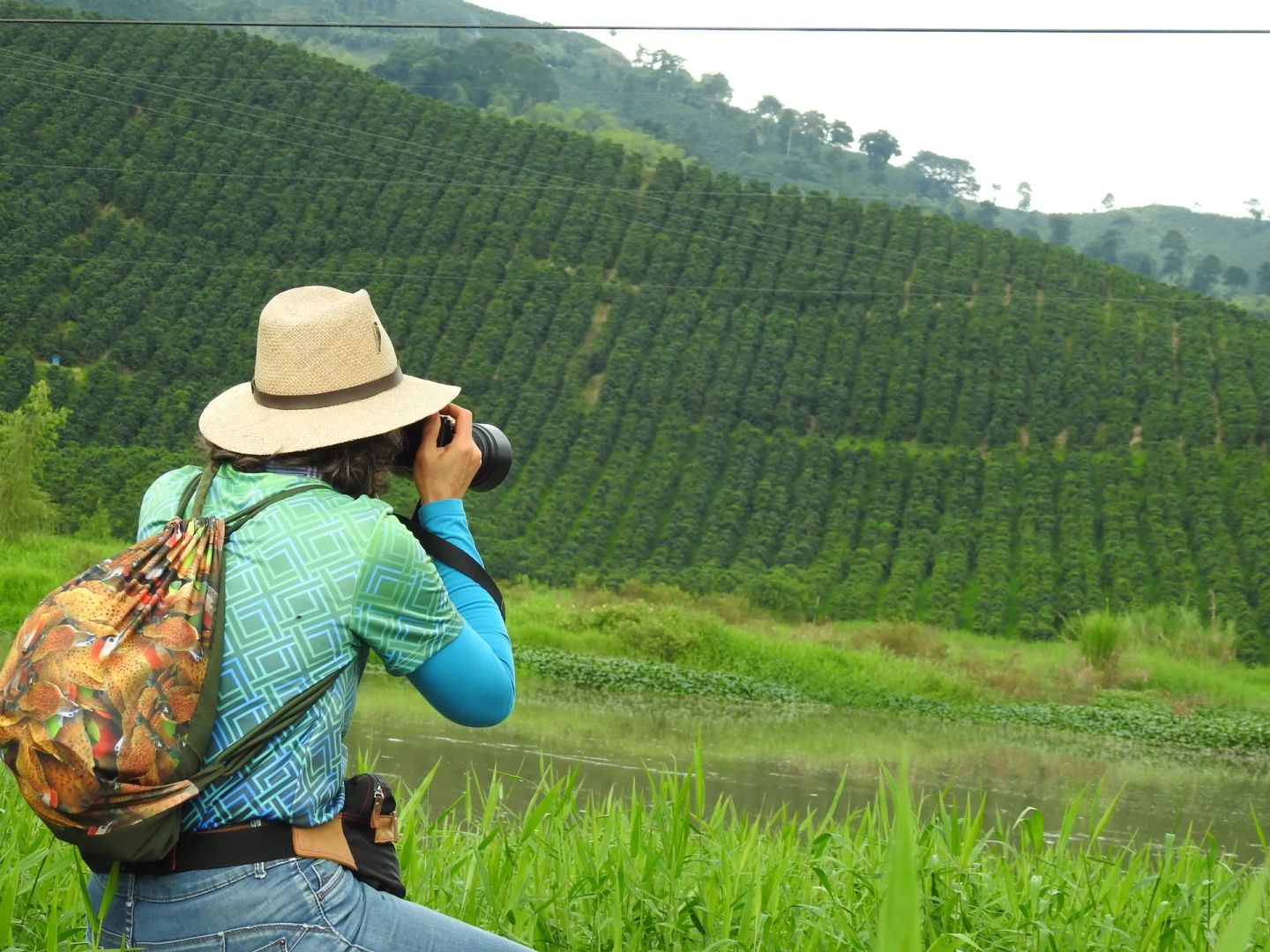
A morning among the coffee plantations, following the bean from plant to cup and learning about the culture built around it, and why the Coffee Cultural Landscape of Colombia is a UNESCO World Heritage site. The birds of the coffee region keep us company the whole time. The Central Andes are a volcanic range, and their ash made the soil this coffee grows in. In the afternoon we continue to Manizales.
Overnight: Manizales
Day 8. Río Blanco and the Geology of the Central Andes
A full day in Río Blanco's high-Andean forest, a reserve that protects Manizales's water and is known among birders for its antpittas, toucans, tanagers and much more. The core of the Central Andes is much older than the volcanoes on top of it, and on the trails we look at both: old metamorphic rock below, younger volcanic ash above.
Overnight: Manizales
Day 9. The Condor Route: Volcanic Landscapes and the Andean Condor
We climb above Manizales along the Condor Route, into the open, high country shaped by the volcanoes of Los Nevados. Along the way we stop to read the land: old lava flows, layers of ash in the roadcuts, and the valleys that mudflows carved on their way down. Each one tells part of the story of how these volcanoes build the landscape and keep reshaping it. Up here we also scan the ridges and the sky for the Andean Condor, the largest flying bird of the Andes and one that is slowly returning to these mountains. Sightings are never certain, but few places show the link between fire and life in the Andes as clearly.
Overnight: Manizales
Day 10.
A last morning walk among the birds and trees of Ecoparque Los Alcázares, then a tour of Manizales itself. The city is built along a narrow ridge of the Central Andes, with the volcanoes on one side and the Cauca Valley on the other, and from up here you can look back over much of the route. In the afternoon we drive to Pereira, where the journey ends.
Signature Species
- Multicolored Tanager
- Horned Screamer
- Andean Condor
- Andean Motmot
- Chestnut-crowned Antpitta
- Colombian Chachalaca
- Toucan Barbet
- Brown-banded Antpitta
- Scarlet and white Tanager
- Black billed mountain Toucan
- Choco screech Owl
- Choco Manakin
- Masked Saltator
- Hawler Monkey
- Eating crab fox
- Agouti
- Armadillo
- Odontoglossum sp.
- Masdevallia sp.
- Miltoniopsis sp.
- Epidendrum sp.
Ideal For
- Keen birders who also want to understand the landscape
- Curious naturalists interested in birds, plants and geology
Gallery
Ready to experience this journey?
Every tour is private and customized for your group. No strangers, no fixed schedules.